Hyundai i30 2025 Petrol, 99 hp

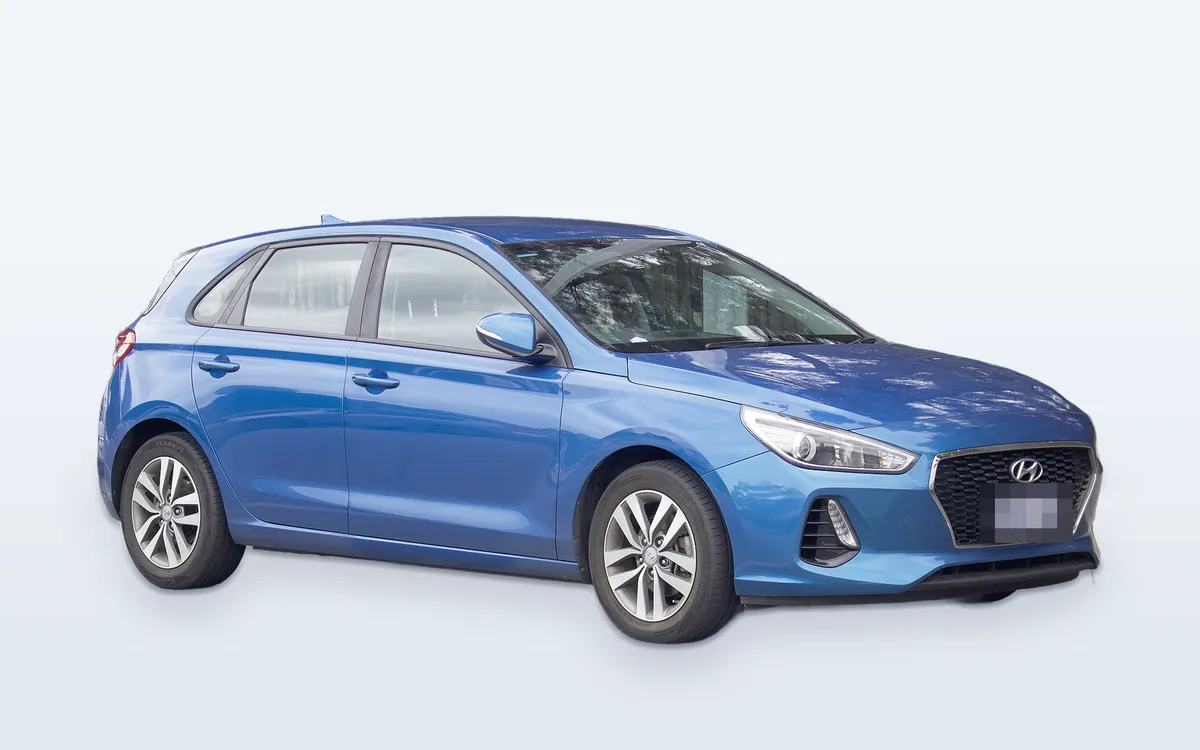
Hyundai i30 (PD), front: example photo of the model
Hyundai i30 (PD) built from 2017 Example photo of the model, not a car for sale

Hyundai i30 (PD): real size

Length 4.59 m
Width 1.80 m without mirrors
Height 1.47 m
Wheelbase 2.65 m
What to show
4.59 m long 1.80 m wide front 4.59 m long 1.47 m high
Loading the 3D view

A plain estate stretched to this car's registered sizes: the shape is a drawing, the sizes are real.

765 of the 2,581 cars of this generation with a size in the register are within 2 cm of this.

Photo EurovisionNim CC BY-SA 4.0 cut out, colour graded, new background

Hyundai i30 (PD), built from 2017

Hyundai i30 (PD), front: example photo of the model

Example photo of the model, not a car for sale

No score yet: every car of this build year has had its first APK in 2030

About as many APK faults as the average car of its age estimate

Median asking price adverts €29,100
Median mileage 4,454 km
For sale 2 few: rough figures
Gearbox Manual or automatic
Body Estate

For

  • Nothing stands out.

Against

  • Few for sale (2): the figures for it are rough

Value and price

Asking prices, not sale prices.Expected prices follow this model's price curve for a car driven 15,000 km a year.
Median asking price €29,100

What it costs to own

Your own use per 100 km
€567 to €573 a month without insurance€6,810 to €6,870 a year€0.45 to €0.46 a km
Insurance is not in this figure.

The coming year

Value loss€3,800
Fuel€2,320
Road tax€688 to €752€172 to €188 per 3 months

In 5 years: value loss €9,690, worth €19,410 then.

Not counted: insurance, upkeep and repairs, interest and parking. Value loss: the price you pay minus what cars like it ask at the end, by our price model of 163,374 adverts, at your odometer and kilometres a year. Selling to a dealer brings less than an asking price. Use: 6.4 litres per 100 km as registered (WLTP), counted as 7.4 litres per 100 km: cars use about 15% more on the road than registered (TNO, 2025). Fuel at €2.10 a litre, the average pump price of 23 Nov 2026 (CBS). Fuel and electricity are counted at today's prices in every year. Road tax: the tax office's tariff of 2026 for every 3 months from today; later tariffs are not set yet. An electric car pays 70% of the tariff up to 2028, 75% in 2029 and all of it from 2030.

Road tax

Belastingdienst
Road tax
€57 to €63 a month€172 to €188 per 3 months€688 to €752 a yearlowest in Noord-Holland, highest in Zuid-Holland
74 kW (101 hp), 1,250 kg 100% of the registered cars€57 to €63 a month
Per province
ProvinceA monthPer 3 months
Drenthe €60 €179
Flevoland €58 €174
Friesland €60 €179
Gelderland €61 €184
Groningen €61 €182
Limburg €59 €177
Noord-Brabant €59 €176
Noord-Holland €57 €172
Overijssel €57 €172
Utrecht €58 €175
Zeeland €58 €174
Zuid-Holland €63 €188

Each version of this model, build year and fuel in the RDW register, at the average empty weight of its cars plus 100 kg: the tariff counts the mass ready to drive. One car can fall a weight class higher or lower. The tax office's tariff for 2026, the province's surcharge included (read on 15 Nov 2026, checked against its own calculator). Charged per 3 months; by direct debit a third of that each month. The tax office's calculator

What these 15 cars are

140 hp 103 kW1.5 l 4-cyl G4LK 12 cars 1 manual, 11 automatic €30,440 most €29,590 to €31,643 loses about €2,840 a year
99 hp 73 kW1.0 l 3-cyl 2 cars 1 manual, 1 automatic €29,100 loses about €2,710 a year

Other versions, 1 car: 160 hp (1 car).

140 hp (12 cars): RDW registers this version as a hybrid without a plug (usually a mild hybrid). Sellers advertise it as petrol.

160 hp (1 car): RDW registers this version as a hybrid without a plug (usually a mild hybrid). Sellers advertise it as petrol.

Trim levels the adverts name

N Line 13 cars €30,440
Comfort 2 cars €29,100

APK record by build year

all versions
Per 100 registered cars, against the average car of the same age on the same inspection schedule. Model faults leave out upkeep (tyres, bulbs, wipers, damage); the APK shows what the inspector found, not breakdowns or what was fixed before. RDW registers i10 under the same model name (HYUNDAI I), so they are counted together.
What to count
0 20 40 60 80 100 2011 2013 2015 2017 2019 2021 Hyundai i30 Petrol 2011: 102.8 model faults per 100 cars, 11,223 cars Hyundai i30 Petrol 2012: 108.2 model faults per 100 cars, 9,890 cars Hyundai i30 Petrol 2013: 102.9 model faults per 100 cars, 5,134 cars Hyundai i30 Petrol 2014: 79.8 model faults per 100 cars, 1,273 cars Hyundai i30 Petrol 2015: 44.7 model faults per 100 cars, 1,043 cars Hyundai i30 Petrol 2016: 34.7 model faults per 100 cars, 711 cars Hyundai i30 Petrol 2017: 19.9 model faults per 100 cars, 974 cars Hyundai i30 Petrol 2018: 10.2 model faults per 100 cars, 1,278 cars Hyundai i30 Petrol 2019: 6.8 model faults per 100 cars, 1,052 cars Hyundai i30 Petrol 2020: 4.2 model faults per 100 cars, 432 cars Hyundai i30 Petrol 2021: 5.6 model faults per 100 cars, 145 cars 0 20 40 60 80 100 2011 2014 2017 2020 Hyundai i30 Petrol 2011: 102.8 model faults per 100 cars, 11,223 cars Hyundai i30 Petrol 2012: 108.2 model faults per 100 cars, 9,890 cars Hyundai i30 Petrol 2013: 102.9 model faults per 100 cars, 5,134 cars Hyundai i30 Petrol 2014: 79.8 model faults per 100 cars, 1,273 cars Hyundai i30 Petrol 2015: 44.7 model faults per 100 cars, 1,043 cars Hyundai i30 Petrol 2016: 34.7 model faults per 100 cars, 711 cars Hyundai i30 Petrol 2017: 19.9 model faults per 100 cars, 974 cars Hyundai i30 Petrol 2018: 10.2 model faults per 100 cars, 1,278 cars Hyundai i30 Petrol 2019: 6.8 model faults per 100 cars, 1,052 cars Hyundai i30 Petrol 2020: 4.2 model faults per 100 cars, 432 cars Hyundai i30 Petrol 2021: 5.6 model faults per 100 cars, 145 cars
Hyundai i30 Petrol Average for cars of that age
Model faults per 100 cars by build year
Build yearThis modelAverage for its ageRegistered cars
2011 102.8 106.4 11,223
2012 108.2 90.7 9,890
2013 102.9 72.5 5,134
2014 79.8 62.7 1,273
2015 44.7 51.7 1,043
2016 34.7 40.0 711
2017 19.9 26.4 974
2018 10.2 17.4 1,278
2019 6.8 8.8 1,052
2020 4.2 8.1 432
2021 5.6 4.0 145
0 100 200 300 400 2011 2013 2015 2017 2019 2021 Hyundai i30 Petrol 2011: 381.6 defects per 100 cars, 11,223 cars Hyundai i30 Petrol 2012: 385.2 defects per 100 cars, 9,890 cars Hyundai i30 Petrol 2013: 383.0 defects per 100 cars, 5,134 cars Hyundai i30 Petrol 2014: 319.7 defects per 100 cars, 1,273 cars Hyundai i30 Petrol 2015: 243.7 defects per 100 cars, 1,043 cars Hyundai i30 Petrol 2016: 211.1 defects per 100 cars, 711 cars Hyundai i30 Petrol 2017: 119.1 defects per 100 cars, 974 cars Hyundai i30 Petrol 2018: 92.4 defects per 100 cars, 1,278 cars Hyundai i30 Petrol 2019: 61.4 defects per 100 cars, 1,052 cars Hyundai i30 Petrol 2020: 48.6 defects per 100 cars, 432 cars Hyundai i30 Petrol 2021: 30.3 defects per 100 cars, 145 cars 0 100 200 300 400 2011 2014 2017 2020 Hyundai i30 Petrol 2011: 381.6 defects per 100 cars, 11,223 cars Hyundai i30 Petrol 2012: 385.2 defects per 100 cars, 9,890 cars Hyundai i30 Petrol 2013: 383.0 defects per 100 cars, 5,134 cars Hyundai i30 Petrol 2014: 319.7 defects per 100 cars, 1,273 cars Hyundai i30 Petrol 2015: 243.7 defects per 100 cars, 1,043 cars Hyundai i30 Petrol 2016: 211.1 defects per 100 cars, 711 cars Hyundai i30 Petrol 2017: 119.1 defects per 100 cars, 974 cars Hyundai i30 Petrol 2018: 92.4 defects per 100 cars, 1,278 cars Hyundai i30 Petrol 2019: 61.4 defects per 100 cars, 1,052 cars Hyundai i30 Petrol 2020: 48.6 defects per 100 cars, 432 cars Hyundai i30 Petrol 2021: 30.3 defects per 100 cars, 145 cars
Hyundai i30 Petrol Average for cars of that age
Defects per 100 cars by build year
Build yearThis modelAverage for its ageRegistered cars
2011 381.6 349.3 11,223
2012 385.2 310.1 9,890
2013 383.0 271.2 5,134
2014 319.7 245.1 1,273
2015 243.7 218.3 1,043
2016 211.1 179.7 711
2017 119.1 135.8 974
2018 92.4 101.4 1,278
2019 61.4 69.8 1,052
2020 48.6 65.8 432
2021 30.3 38.0 145

Other build years for sale

Similar cars

Petrol estate of 2024 to 2026, within 15% of this price and 10% of this weight, best score first.
Skoda Octavia, front: example photo of the model Skoda Octavia 2025PetrolAutomatic median €29,990 –
Kia Ceed, front: example photo of the model Kia Ceed 2025PetrolManual or automatic median €24,970 –
Kia ProCeed, front: example photo of the model Kia ProCeed 2024PetrolAutomatic median €28,950 –
MINI Clubman, front: example photo of the model MINI Clubman 2024PetrolAutomatic median €25,888 –
Hyundai i30, front: example photo of the model Hyundai i30 2025this car median €29,100 –

Spec sheet

RDW all versions
The list price when new is the Dutch price with options and taxes.
Engine power (average)
21 kW (29 hp)
Empty weight (average)
1,290 kg
CO₂ (average)
121 g/km
Length and width
4.59 m long, 1.80 m wide, without mirrors

What the adverts say

adverts all versions

Adverts seen up to 23 Nov 2026.