Hyundai i30 2017 Petrol

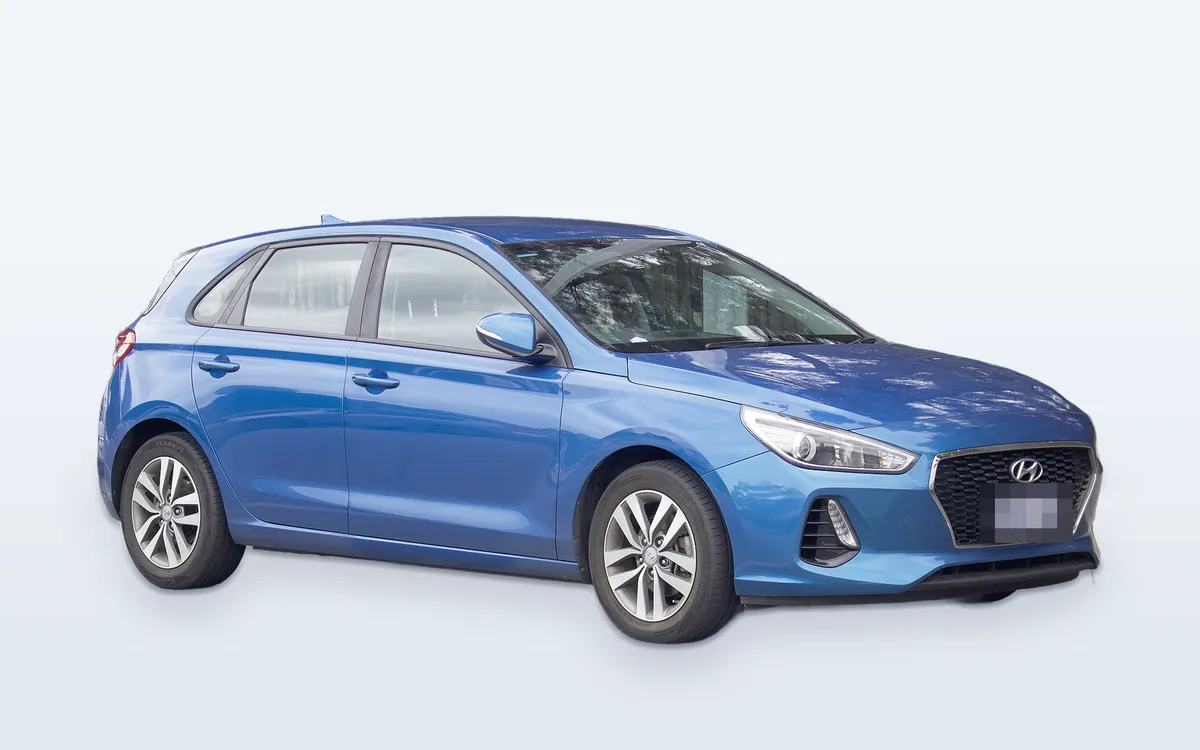
Hyundai i30 (PD), front: example photo of the model
Hyundai i30 (PD) built from 2017 Example photo of the model, not a car for sale Of the i30s built in 2017, 75% are this generation (RDW type codes).

Hyundai i30 (PD): real size

Length 4.59 m
Width 1.80 m without mirrors
Height 1.47 m
Wheelbase 2.65 m
What to show
4.59 m long 1.80 m wide front 4.59 m long 1.47 m high
Loading the 3D view

A plain hatchback stretched to this car's registered sizes: the shape is a drawing, the sizes are real.

765 of the 2,581 cars of this generation with a size in the register are within 2 cm of this.

Photo EurovisionNim CC BY-SA 4.0 cut out, colour graded, new background

Hyundai i30 (PD), built from 2017

Hyundai i30 (PD), front: example photo of the model

Example photo of the model, not a car for sale

32.8 weak against cars of its price

25% fewer APK faults than average for its age

Median asking price adverts €12,325 Most adverts ask €10,852 to €13,947
Median mileage 132,970 km
For sale 14
Gearbox Manual or automatic
Body Hatchback

RDW G4LD 6-speed manual€25,870 when new

For

  • 25% fewer model faults at the APK than the average car of its age
  • No recall notices on record for these cars

Against

  • Loses value faster than 92% of cars at its price
  • Adverts ask about 16% more than this model usually costs at this age and mileage

Value and price

Asking prices, not sale prices.Expected prices follow this model's price curve for a car driven 15,000 km a year.
Median asking price €12,325
Most adverts ask €10,852 to €13,947
Against the price when new a median 44% of their own price when new (14 cars)
Asking prices are about 16% above what this model usually costs at this age and mileage
Adverts that lowered their price 7% of 14 adverts seen more than once, median 0.0%
Sellers dealer 100% (median €12,325)

What it costs to own

Your own use per 100 km
€340 to €346 a month without insurance€4,080 to €4,150 a year€0.27 to €0.28 a km
Insurance is not in this figure.

The coming year

Value loss€1,580
Fuel€1,810
Road tax€688 to €752€172 to €188 per 3 months

In 5 years: value loss €6,480, worth €6,470 then.

Not counted: insurance, upkeep and repairs, interest and parking. Value loss: the price you pay minus what cars like it ask at the end, by our price model of 163,374 adverts, at your odometer and kilometres a year. Selling to a dealer brings less than an asking price. Use: 5.0 litres per 100 km as registered (NEDC), counted as 5.8 litres per 100 km: cars use about 15% more on the road than registered (TNO, 2025). Fuel at €2.10 a litre, the average pump price of 23 Nov 2026 (CBS). Fuel and electricity are counted at today's prices in every year. Road tax: the tax office's tariff of 2026 for every 3 months from today; later tariffs are not set yet. An electric car pays 70% of the tariff up to 2028, 75% in 2029 and all of it from 2030.

Road tax

Belastingdienst
Road tax
€57 to €63 a month€172 to €188 per 3 months€688 to €752 a yearlowest in Noord-Holland, highest in Zuid-Holland
88 kW (120 hp), 1,180 kg 45% of the registered cars€57 to €63 a month
103 kW (140 hp), 1,220 kg 29% of the registered cars€57 to €63 a month
99 kW (135 hp), 1,180 kg 20% of the registered cars€57 to €63 a month
74 kW (101 hp), 1,190 kg 6% of the registered cars€57 to €63 a month
Per province
ProvinceA monthPer 3 months
Drenthe €60 €179
Flevoland €58 €174
Friesland €60 €179
Gelderland €61 €184
Groningen €61 €182
Limburg €59 €177
Noord-Brabant €59 €176
Noord-Holland €57 €172
Overijssel €57 €172
Utrecht €58 €175
Zeeland €58 €174
Zuid-Holland €63 €188

Each version of this model, build year and fuel in the RDW register, at the average empty weight of its cars plus 100 kg: the tariff counts the mass ready to drive. One car can fall a weight class higher or lower. The tax office's tariff for 2026, the province's surcharge included (read on 15 Nov 2026, checked against its own calculator). Charged per 3 months; by direct debit a third of that each month. The tax office's calculator

What these 14 cars are

140 hp 103 kW1.4 l 4-cyl G4LD 6 cars 6-speed manual (RDW) €12,950 most €12,538 to €14,196 loses about €1,470 a year
120 hp 88 kW1.0 l 3-cyl G3LC 4 cars 6-speed manual (RDW) €10,448 loses about €1,190 a year
135 hp 99 kW1.6 l 4-cyl G4FD 3 cars 6-speed manual (RDW) €10,940 loses about €1,250 a year

Other versions, 1 car: 186 hp (1 car).

Trim levels the adverts name

Comfort 5 cars €11,900
Go! 3 cars €10,940
Premium 3 cars €13,944

Options

adverts

APK record by build year

Per 100 registered cars, against the average car of the same age on the same inspection schedule. Model faults leave out upkeep (tyres, bulbs, wipers, damage); the APK shows what the inspector found, not breakdowns or what was fixed before. RDW registers i10 under the same model name (HYUNDAI I), so they are counted together.
What to count
0 20 40 60 80 100 2011 2013 2015 2017 2019 2021 Hyundai i30 Petrol 2011: 102.8 model faults per 100 cars, 11,223 cars Hyundai i30 Petrol 2012: 108.2 model faults per 100 cars, 9,890 cars Hyundai i30 Petrol 2013: 102.9 model faults per 100 cars, 5,134 cars Hyundai i30 Petrol 2014: 79.8 model faults per 100 cars, 1,273 cars Hyundai i30 Petrol 2015: 44.7 model faults per 100 cars, 1,043 cars Hyundai i30 Petrol 2016: 34.7 model faults per 100 cars, 711 cars Hyundai i30 Petrol 2017: 19.9 model faults per 100 cars, 974 cars Hyundai i30 Petrol 2018: 10.2 model faults per 100 cars, 1,278 cars Hyundai i30 Petrol 2019: 6.8 model faults per 100 cars, 1,052 cars Hyundai i30 Petrol 2020: 4.2 model faults per 100 cars, 432 cars Hyundai i30 Petrol 2021: 5.6 model faults per 100 cars, 145 cars 0 20 40 60 80 100 2011 2014 2017 2020 Hyundai i30 Petrol 2011: 102.8 model faults per 100 cars, 11,223 cars Hyundai i30 Petrol 2012: 108.2 model faults per 100 cars, 9,890 cars Hyundai i30 Petrol 2013: 102.9 model faults per 100 cars, 5,134 cars Hyundai i30 Petrol 2014: 79.8 model faults per 100 cars, 1,273 cars Hyundai i30 Petrol 2015: 44.7 model faults per 100 cars, 1,043 cars Hyundai i30 Petrol 2016: 34.7 model faults per 100 cars, 711 cars Hyundai i30 Petrol 2017: 19.9 model faults per 100 cars, 974 cars Hyundai i30 Petrol 2018: 10.2 model faults per 100 cars, 1,278 cars Hyundai i30 Petrol 2019: 6.8 model faults per 100 cars, 1,052 cars Hyundai i30 Petrol 2020: 4.2 model faults per 100 cars, 432 cars Hyundai i30 Petrol 2021: 5.6 model faults per 100 cars, 145 cars
Hyundai i30 Petrol Average for cars of that age
Model faults per 100 cars by build year
Build yearThis modelAverage for its ageRegistered cars
2011 102.8 106.4 11,223
2012 108.2 90.7 9,890
2013 102.9 72.5 5,134
2014 79.8 62.7 1,273
2015 44.7 51.7 1,043
2016 34.7 40.0 711
2017 19.9 26.4 974
2018 10.2 17.4 1,278
2019 6.8 8.8 1,052
2020 4.2 8.1 432
2021 5.6 4.0 145
0 100 200 300 400 2011 2013 2015 2017 2019 2021 Hyundai i30 Petrol 2011: 381.6 defects per 100 cars, 11,223 cars Hyundai i30 Petrol 2012: 385.2 defects per 100 cars, 9,890 cars Hyundai i30 Petrol 2013: 383.0 defects per 100 cars, 5,134 cars Hyundai i30 Petrol 2014: 319.7 defects per 100 cars, 1,273 cars Hyundai i30 Petrol 2015: 243.7 defects per 100 cars, 1,043 cars Hyundai i30 Petrol 2016: 211.1 defects per 100 cars, 711 cars Hyundai i30 Petrol 2017: 119.1 defects per 100 cars, 974 cars Hyundai i30 Petrol 2018: 92.4 defects per 100 cars, 1,278 cars Hyundai i30 Petrol 2019: 61.4 defects per 100 cars, 1,052 cars Hyundai i30 Petrol 2020: 48.6 defects per 100 cars, 432 cars Hyundai i30 Petrol 2021: 30.3 defects per 100 cars, 145 cars 0 100 200 300 400 2011 2014 2017 2020 Hyundai i30 Petrol 2011: 381.6 defects per 100 cars, 11,223 cars Hyundai i30 Petrol 2012: 385.2 defects per 100 cars, 9,890 cars Hyundai i30 Petrol 2013: 383.0 defects per 100 cars, 5,134 cars Hyundai i30 Petrol 2014: 319.7 defects per 100 cars, 1,273 cars Hyundai i30 Petrol 2015: 243.7 defects per 100 cars, 1,043 cars Hyundai i30 Petrol 2016: 211.1 defects per 100 cars, 711 cars Hyundai i30 Petrol 2017: 119.1 defects per 100 cars, 974 cars Hyundai i30 Petrol 2018: 92.4 defects per 100 cars, 1,278 cars Hyundai i30 Petrol 2019: 61.4 defects per 100 cars, 1,052 cars Hyundai i30 Petrol 2020: 48.6 defects per 100 cars, 432 cars Hyundai i30 Petrol 2021: 30.3 defects per 100 cars, 145 cars
Hyundai i30 Petrol Average for cars of that age
Defects per 100 cars by build year
Build yearThis modelAverage for its ageRegistered cars
2011 381.6 349.3 11,223
2012 385.2 310.1 9,890
2013 383.0 271.2 5,134
2014 319.7 245.1 1,273
2015 243.7 218.3 1,043
2016 211.1 179.7 711
2017 119.1 135.8 974
2018 92.4 101.4 1,278
2019 61.4 69.8 1,052
2020 48.6 65.8 432
2021 30.3 38.0 145

Cars built in 2017: 19.9 model faults per 100 cars, where cars of that age average 26.4 (25% fewer). All defects including upkeep: 119.1 per 100 cars (average 135.8). 974 registered cars.

Other build years for sale

Most common APK defects

RDW
Per 100 registered cars of this model and build year, all fuels. The descriptions are RDW's own, in Dutch.

Model faults

  1. Waarschuwingsinrichting controlesysteem bandenspanning geeft 3.5
  2. Drager/bevestigingsmiddel van remvoering raakt trommel/schij 3.3
  3. Parkeerrem werkt niet op 2 wielen 2.0
  4. Remschijf ernstig gecorrodeerd 1.1
  5. Schijf-, trommelrem loopt niet vrij 1.0
  6. Remverschil op 1 as te groot 0.9

Upkeep items (not counted in reliability)

  1. Bandenspanning niet op juiste waarde tyres 17.8
  2. Band onvoldoende profiel tyres 12.5
  3. Band(en) aanwezig met een profieldiepte van 1,6 t/m 2,5 mm tyres 11.5
  4. Dimlicht onjuist afgesteld headlight aim 9.9

Why it scores 32.8

Each bar: better than how many percent of the cars that cost about the same.
Value in 5 years 45% keeps 43%, loses about €1,400 a year 8
Faults in 5 years 40% about 0.7 APK faults per car by then 57
Mileage for its age 15% 132,970 km, normal for 2017 41

How sure best estimate 32.2 The score is 32.8: our best estimate 32.2, moved toward the middle of all cars by how unsure it is. A car we know well keeps its estimate; one we know less about moves toward the middle, up or down.

Similar cars

Petrol hatchback of 2016 to 2018, within 15% of this price and 10% of this weight, best score first.
Volkswagen Golf, front: example photo of the model Volkswagen Golf 2017PetrolManual or automatic median €13,675 54.7fair
Audi A3, front: example photo of the model Audi A3 2017PetrolManual or automatic median €13,993 52.3fair
Toyota Auris, front: example photo of the model Toyota Auris 2017PetrolManual or automatic median €13,300 51.0fair
MINI Cooper, front: example photo of the model MINI Cooper 2017PetrolManual or automatic median €13,825 48.9fair
BMW 1-Serie, front: example photo of the model BMW 1-Serie 2017PetrolManual or automatic median €12,950 40.8fair
Alfa Romeo Giulietta, front: example photo of the model Alfa Romeo Giulietta 2017PetrolManual or automatic median €12,690 35.0weak
Hyundai i30, front: example photo of the model Hyundai i30 2017this car median €12,325 32.8weak

As good or better, for less The same kind of car for at most 90% of this price, scoring at most 2 points lower, or higher.

Citroen C4 Cactus, front: example photo of the model Citroen C4 Cactus 2016PetrolManual or automatic median €6,900 62.8good
Nissan Pulsar, front: example photo of the model Nissan Pulsar 2016PetrolManual or automatic median €6,950 57.2fair
Citroen C4, front: example photo of the model Citroen C4 2017PetrolManual or automatic median €7,900 33.6weak

Same engine in other models

In the 103 kW (140 hp) version of this model

Size 1.4 l
Cylinders 4
Fuel Petrol
Registered cars 4,840
APK defects About average

APK defects: the cars with the G4LD against the cars of the same models and build years with another engine, as inspectors recorded them.

Other models with the G4LD

Kia Ceed, front: example photo of the model Kia Ceed built 2018 to 20221,763 registered with it Price and score: the 2022 petrol median €16,450 –

Kia ProCeed, front: example photo of the model Kia ProCeed built 2019 to 20211,073 registered with it Price and score: the 2021 petrol median €19,890 57.1fair

Kia Xceed, front: example photo of the model Kia Xceed built 2019 to 2021693 registered with it Price and score: the 2021 petrol median €16,950 69.0good

In the 88 kW (120 hp) version of this model

Size 1.0 l
Cylinders 3
Fuel Petrol
Registered cars 38,148
APK defects About average

APK defects: the cars with the G3LC against the cars of the same models and build years with another engine, as inspectors recorded them.

Other models with the G3LC

Hyundai i20, front: example photo of the model Hyundai i20 built 2015 to 20208,665 registered with it Price and score: the 2019 petrol median €12,200 57.1fair

Kia Stonic, front: example photo of the model Kia Stonic built 2017 to 20217,288 registered with it Price and score: the 2021 petrol median €14,900 80.8excellent

Kia Rio, front: example photo of the model Kia Rio built 2017 to 20216,493 registered with it Price and score: the 2017 petrol median €10,750 50.7fair

Kia Ceed, front: example photo of the model Kia Ceed built 2015 to 20206,369 registered with it Price and score: the 2019 petrol median €13,595 57.7fair
Hyundai Kona, front: example photo of the model Hyundai Kona built 2017 to 20204,835 registered with it Price and score: the 2018 petrol median €12,914 58.1fair

Kia Picanto, front: example photo of the model Kia Picanto built 2017 to 20202,122 registered with it Price and score: the 2019 petrol median €9,450 72.0good
Kia Xceed, front: example photo of the model Kia Xceed built 2019 to 2020412 registered with it Price and score: the 2020 petrol median €17,450 67.8good
Kia ProCeed, front: example photo of the model Kia ProCeed built 2019 to 2020368 registered with it Price and score: the 2019 petrol median €17,950 46.9fair

Spec sheet

RDW
The list price when new is the Dutch price with options and taxes.
Engine power (average)
94 kW (128 hp)
Empty weight (average)
1,200 kg
CO₂ (average)
117 g/km
List price when new
€25,870 median
Length and width
4.59 m long, 1.80 m wide, without mirrors

The maker's figures, as the adverts state them adverts

Torque
164 Nm to 242 Nm
0 to 100 km/h
9.2 s to 11.3 s
Top speed
187 km/h to 204 km/h
Boot
378 l, 1,316 l with the back seats folded

What the adverts say

adverts

Adverts seen up to 23 Nov 2026.