Mercedes-Benz E-Class 2020 Hybrid
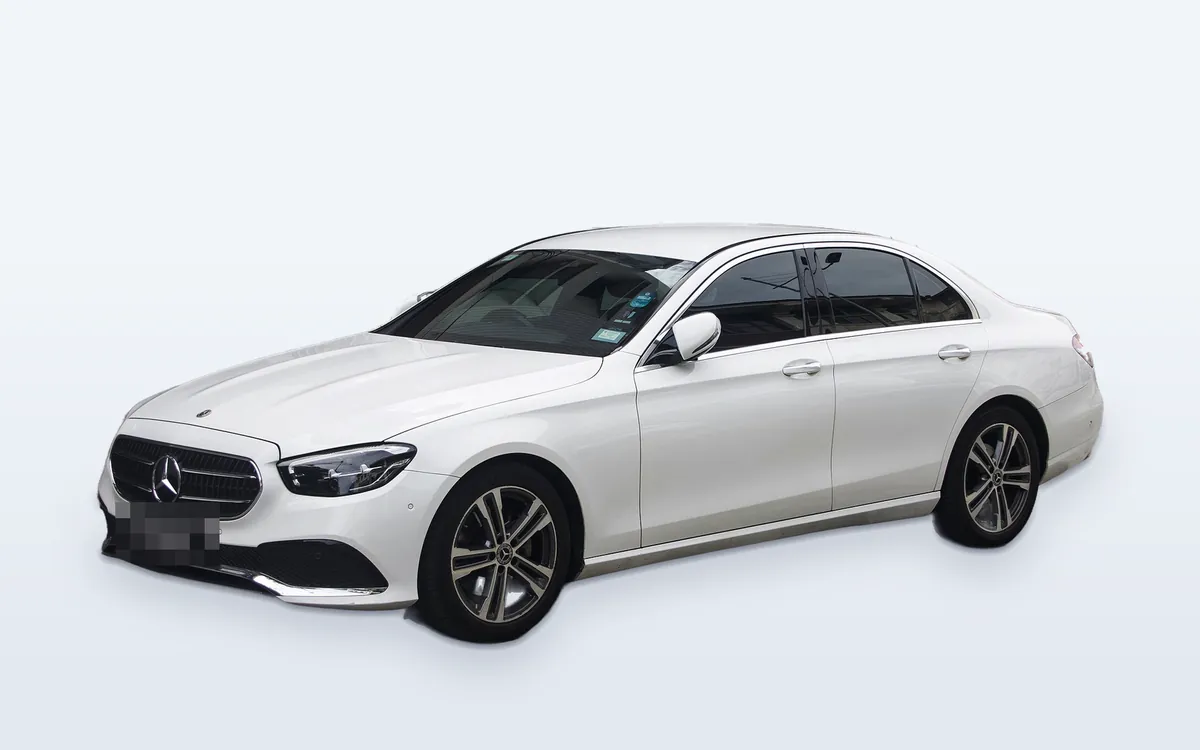
Photo LuvsMG481 CC BY-SA 4.0 cut out, colour graded, new background
36.4 weak against cars of its price ours 36.4
30% fewer APK faults than average for its age
RDW 9-speed automatic 5 recall campaigns 4 with a fire or accident risk
For
- 30% fewer model faults at the APK than the average car of its age
Against
- Loses value faster than 85% of cars at its price
- 5.9% of these cars are registered taxis (all cars: 0.4%)
- 20% still have an open safety recall: ask whether the car you look at had it done
Value and price
42% of the price when new
What it costs to own
Your own use per 100 km
Counted for the coming year, 15,000 km a year, every province.
The coming year
In 5 years: value loss €15,540, worth €15,360 then.
Not counted: fuel and charging (a plug-in's use depends on how often it is charged: add your own use), insurance, upkeep and repairs, interest and parking. Value loss: the price you pay minus what cars like it ask at the end, by our price model of 168,088 adverts, at your odometer and kilometres a year. Selling to a dealer brings less than an asking price. Road tax: the tax office's tariff of 2026 for every 3 months from today; later tariffs are not set yet. An electric car pays 70% of the tariff up to 2028, 75% in 2029 and all of it from 2030.
Road tax
Belastingdienst €102 to €141 a month
Per province
| Province | A month | Per 3 months |
|---|---|---|
| Drenthe | €106 to €134 | €319 to €403 |
| Flevoland | €103 to €130 | €310 to €391 |
| Friesland | €106 to €134 | €319 to €403 |
| Gelderland | €109 to €138 | €327 to €414 |
| Groningen | €108 to €136 | €324 to €409 |
| Limburg | €105 to €133 | €315 to €398 |
| Noord-Brabant | €104 to €132 | €313 to €395 |
| Noord-Holland | €102 to €129 | €307 to €387 |
| Overijssel | €102 to €129 | €307 to €387 |
| Utrecht | €104 to €131 | €312 to €394 |
| Zeeland | €103 to €130 | €310 to €391 |
| Zuid-Holland | €112 to €141 | €335 to €423 |
Each version of this model, build year and fuel in the RDW register, at the average empty weight of its cars plus 100 kg: the tariff counts the mass ready to drive. One car can fall a weight class higher or lower. A hybrid or plug-in hybrid has no tariff of its own: this is the petrol tariff. A diesel hybrid pays the diesel tariff. The tax office's tariff for 2026, the province's surcharge included (read on 15 Nov 2026, checked against its own calculator). Charged per 3 months; by direct debit a third of that each month. The tax office's calculator
What these 33 cars are
Most common: E 300
Plug-in or not: 26 of the 33 adverts name the car a plug-in hybrid. The others do not say. RDW has 486 plug-in hybrids and 483 hybrids without a plug of this model registered in 2020.
Trim levels the adverts name
Versions registered in the Netherlands The power is that of the combustion engine alone. Price when new: the Dutch list price with options and taxes.
| Version | Registered cars | Gearbox and use | Price when new |
|---|---|---|---|
| 145 kW (197 hp) 2.0 l 4-cylhybrid, no plugplus a 10 kW electric motor 264920 | 410 | 9-speed automatic7.6 l/100 kmtows 2,270 kg | €58,849 to €78,951 |
| 155 kW (211 hp) 2.0 l 4-cylplug-in hybridplus a 90 kW electric motor 274920 | 282 | 9-speed automatic7.0 l/100 km64 km electrictows 2,100 kg | €68,389 to €80,295 |
| 143 kW (194 hp) 2.0 l 4-cylplug-in hybridplus a 95 kW electric motor 654920 | 204 | 9-speed automatic5.8 l/100 km51 km electrictows 2,100 kg | €69,832 to €84,097 |
| 190 kW (258 hp) 2.0 l 4-cylhybrid, no plugplus a 10 kW electric motor 264920 | 34 | 9-speed automatic7.8 l/100 kmtows 2,100 kg | €77,138 to €92,778 |
| 220 kW (299 hp) 2.0 l 4-cylhybrid, no plugplus a 10 kW electric motor 264920 | 25 | 9-speed automatic8.4 l/100 kmtows 2,100 kg | €82,245 to €102,723 |
| 270 kW (367 hp) 3.0 l 6-cylhybrid, no plugplus a 16 kW electric motor | 12 | 8.4 l/100 kmtows 2,100 kg | €90,626 to €132,679 |
Options
adverts Climate control, Air conditioning, Heated seats and 20 more
On most of these cars
- Climate control
- Air conditioning
- Heated seats
- Cruise control
- Navigation
- LED headlights
- Collision warning
- Tinted windows
Show all 23
On some of these cars
APK record by build year
30% fewer APK faults than average for its age
Model faults per 100 cars by build year
| Build year | This model | Average for its age | Registered cars |
|---|---|---|---|
| 2012 | 92.3 | 90.7 | 26 |
| 2013 | 79.4 | 72.5 | 148 |
| 2014 | 62.5 | 62.7 | 99 |
| 2015 | 51.3 | 51.7 | 90 |
| 2016 | 40.1 | 40.0 | 612 |
| 2017 | 24.2 | 26.4 | 66 |
| 2018 | 8.6 | 17.4 | 116 |
| 2019 | 4.2 | 8.8 | 412 |
| 2020 | 3.6 | 8.1 | 969 |
| 2021 | 2.4 | 4.0 | 1,192 |
Defects per 100 cars by build year
| Build year | This model | Average for its age | Registered cars |
|---|---|---|---|
| 2012 | 161.5 | 310.1 | 26 |
| 2013 | 204.1 | 271.2 | 148 |
| 2014 | 179.8 | 245.1 | 99 |
| 2015 | 185.6 | 218.3 | 90 |
| 2016 | 143.5 | 179.7 | 612 |
| 2017 | 134.8 | 135.8 | 66 |
| 2018 | 103.4 | 101.4 | 116 |
| 2019 | 74.8 | 69.8 | 412 |
| 2020 | 64.0 | 65.8 | 969 |
| 2021 | 33.8 | 38.0 | 1,192 |
Cars built in 2020: 3.6 model faults per 100 cars, where cars of that age average 8.1 (56% fewer). All defects including upkeep: 64.0 per 100 cars (average 65.8). 969 registered cars.
Other build years for sale
Most common APK defects
RDW Most common: Fusee(kogel) te veel speling
Model faults
- Fusee(kogel) te veel speling 1.2
- Drager/bevestigingsmiddel van remvoering raakt trommel/schij 0.5
- Stofhoes aandrijfas beschadigd en dicht niet af 0.3
- Waarschuwingsinrichting controlesysteem bandenspanning geeft 0.3
- Roetfilter werkt niet goed, aantal deeltjes meer dan toegest 0.2
- Slijtage/beschadiging wiellager hoorbaar of voelbaar 0.2
Upkeep items (not counted in reliability)
- Band(en) aanwezig met een profieldiepte van 1,6 t/m 2,5 mm tyres 14.9
- Bandenspanning niet op juiste waarde tyres 11.9
- Band onvoldoende profiel tyres 8.7
- Dimlicht onjuist afgesteld headlight aim 8.7
Recalls
RDW 5 recall campaigns, 4 with a fire or accident risk
- Electrics 11 May 2020 fire risk In de spanningsrail bij de motor kan kortsluiting ontstaan door vocht inwerking. Built 2015 to 2020, not all fixed yet
- Engine, fuel and cooling 11 Jan 2022 fire risk Door vloeistoflekkage in het vacuümcircuit kan door elektrochemische reactie de temperatuur van elektrische componenten op een punt komen waarop risico voor brand wordt bereikt. Built 2017 to 2023, not all fixed yet
- Body 21 Oct 2019 accident risk De achterspoiler is mogelijk niet correct aan de achterklep bevestigd. Built 2016 to 2020, not all fixed yet
Show all 5
- Electrics 16 Nov 2022 more injury in a crash De bevestiging van de 12 V batterij in de kofferruimte is mogelijk onvoldoende bestand tegen de belasting bij een ongeval. Built 2018 to 2023, not all fixed yet
- Electrics 1 Aug 2023 accident risk De kabelboom van de vermogens elektronica kan mogelijk doorschuren tegen de bodemplaat. Built 2020 to 2023, not all fixed yet
Why it scores 36.4
Value 15, faults 58, mileage 36
How sure best estimate 35.5 The score is 36.4: our best estimate 35.5, moved toward the middle of all cars by how unsure it is. A car we know well keeps its estimate; one we know less about moves toward the middle, up or down.
Similar cars
BMW 3 Series, BMW 5 Series, Volvo S60 and 2 more
 Mercedes-Benz E-Class 2020this car median €30,949 36.4weak

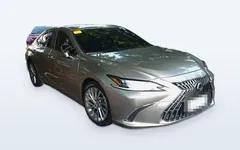
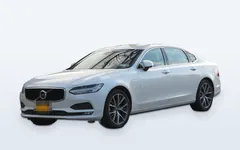
As good or better, for less The same kind of car for at most 90% of this price, scoring at most 2 points lower, or higher.


Same engine in other models
In the 145 kW (197 hp), 190 kW (258 hp) and 220 kW (299 hp) versions of this model
APK defects: the cars with the 264920 against the cars of the same models and build years with another engine, as inspectors recorded them.
Other models with the 264920
 Mercedes-Benz GLC built 2019 to 20231,654 registered with it Price and score: the 2023 hybrid median €55,070 –
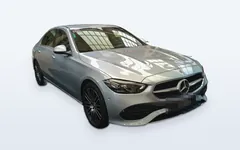 Mercedes-Benz C-Class built 2018 to 2025477 registered with it Price and score: the 2022 hybrid median €33,750 –
 Mercedes-Benz CLS built 2019 to 202528 registered with it Price and score: the 2019 petrol median €37,150 –
In the 155 kW (211 hp) version of this model
APK defects: the cars with the 274920 against the cars of the same models and build years with another engine, as inspectors recorded them.
Other models with the 274920
Mercedes-Benz GLC built 2015 to 202411,276 registered with it Price and score: the 2023 hybrid median €55,070 – Mercedes-Benz C-Class built 2014 to 20229,530 registered with it Price and score: the 2022 hybrid median €33,750 – 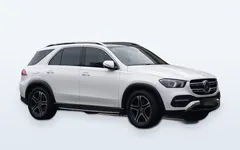 Mercedes-Benz GLE built 2020 to 20241,999 registered with it Price and score: the 2021 hybrid median €52,973 51.0fair
 Mercedes-Benz GLK built 2013 to 2015119 registered with it Price and score: the 2009 petrol median €12,850 –
Spec sheet
RDW
- Engine power
- 143 kW (194 hp) to 155 kW (211 hp)
- Engine size
- 2.0 l
- Cylinders
- 4
- Electric motor
- 10 kW to 95 kW
- Empty weight
- 1,650 kg to 2,020 kg
- CO₂ (type approval)
- 173 g/km
- Fuel use (type approval)
- 5.8 l/100 km to 7.6 l/100 km
- Electric range (type approval)
- 51 km to 64 km
- Towing, braked trailer
- 2,100 kg to 2,270 kg
- Length and width
- 5.00 m long, 1.87 m wide, without mirrors
The maker's figures, as the adverts state them adverts
- Torque
- 320 Nm to 350 Nm
- 0 to 100 km/h
- 5.8 s to 7.6 s
- Top speed
- 237 km/h to 250 km/h
- Boot
- 540 l, 1,660 l with the back seats folded
What the adverts say
adverts
Adverts seen up to 23 Nov 2026.