No score yet: every car of this build year has had its first APK in 2028
About as many APK faults as the average car of its age estimate
Median asking price adverts €29,110
Median mileage 36,070 km
For sale 2 few: rough figures
Gearbox Manual
Body Hatchback
RDW G4FV6-speed manual€23,695 when new 3 recall campaigns 2 with a fire or accident risk
For
Nothing stands out.
Against
− Few for sale (2): the figures for it are rough
Value and price
Asking prices, not sale prices.Expected prices follow this model's price curve for a car driven 15,000 km a year.
Median asking price€29,110
Against the price when new72% of its median list price when new (€40,255)
What it costs to own
Your own use per 100 km
Counted for the coming year, 15,000 km a year, every province.
€295 to €298 a month without insurance€3,540 to €3,580 a year€0.24 a km
Insurance is not in this figure.
The coming year
Value loss€1,210
Fuel€1,850
Road tax€476 to €516€119 to €129 per 3 months
In 5 years: value loss €9,090, worth €20,020 then.
Not counted: insurance, upkeep and repairs, interest and parking. Value loss: the price you pay minus what cars like it ask at the end, by our price model of 163,374 adverts, at your odometer and kilometres a year. Selling to a dealer brings less than an asking price. Use: 5.1 litres per 100 km as registered (WLTP), counted as 5.9 litres per 100 km: cars use about 15% more on the road than registered (TNO, 2025). Fuel at €2.10 a litre, the average pump price of 23 Nov 2026 (CBS). Fuel and electricity are counted at today's prices in every year. Road tax: the tax office's tariff of 2026 for every 3 months from today; later tariffs are not set yet. An electric car pays 70% of the tariff up to 2028, 75% in 2029 and all of it from 2030.
Road tax
Belastingdienst
Road tax
€40 to €53 a month€119 to €158 per 3 months€476 to €632 a yearlowest in Noord-Holland, highest in Zuid-Holland
62 kW (84 hp), 990 kg 64% of the registered cars€40 to €43 a month
74 kW (101 hp), 1,050 kg 36% of the registered cars€48 to €53 a month
Per province
Province
A month
Per 3 months
Drenthe
€41 to €50
€123 to €151
Flevoland
€40 to €49
€120 to €147
Friesland
€41 to €50
€123 to €151
Gelderland
€42 to €52
€126 to €155
Groningen
€42 to €51
€125 to €153
Limburg
€41 to €50
€122 to €149
Noord-Brabant
€40 to €49
€121 to €148
Noord-Holland
€40 to €48
€119 to €145
Overijssel
€40 to €49
€119 to €146
Utrecht
€40 to €49
€121 to €148
Zeeland
€40 to €49
€120 to €147
Zuid-Holland
€43 to €53
€129 to €158
Each version of this model, build year and fuel in the RDW register, at the average empty weight of its cars plus 100 kg: the tariff counts the mass ready to drive. One car can fall a weight class higher or lower. The tax office's tariff for 2026, the province's surcharge included (read on 15 Nov 2026, checked against its own calculator). Charged per 3 months; by direct debit a third of that each month. The tax office's calculator
What these 40 cars are
101 hp74 kW1.0 l 3-cylG3LF33 cars6-speed manual (RDW) €17,950 most €15,889 to €19,898 loses about €1,640 a year
84 hp62 kW1.2 l 4-cylG4LF3 cars5-speed manual (RDW) €14,950 loses about €1,370 a year
120 hp88 kW1.0 l 3-cylG3LF2 cars7-speed automatic (RDW) €19,600 loses about €1,790 a year
204 hp150 kW1.6 l 4-cylG4FV2 cars6-speed manual (RDW) €29,110 loses about €2,660 a year
101 hp (33 cars): RDW registers this version as a hybrid without a plug (usually a mild hybrid). Sellers advertise it as petrol.
120 hp (2 cars): RDW registers this version as a hybrid without a plug (usually a mild hybrid). Sellers advertise it as petrol.
Trim levels the adverts name
Comfort16 cars€16,920
Comfort Smart10 cars€16,850
N Line5 cars€19,400
Versions registered in the Netherlands Price when new: the Dutch list price with options and taxes.
Version
Registered cars
Gearbox and use
Price when new
150 kW (204 hp)1.6 l 4-cylG4FV
10
6-speed manual7.0 l/100 kmtows 1,110 kg
€36,207 to €46,909
APK record by build year
all versions
Per 100 registered cars, against the average car of the same age on the same inspection schedule. Model faults leave out upkeep (tyres, bulbs, wipers, damage); the APK shows what the inspector found, not breakdowns or what was fixed before.
Hyundai i20 Petrol Average for cars of that age Model faults per 100 cars by build year
Build year
This model
Average for its age
Registered cars
2011
118.7
106.4
3,441
2012
95.6
90.7
4,268
2013
82.1
72.5
2,894
2014
75.2
62.7
2,681
2015
51.0
51.7
3,253
2016
32.3
40.0
2,664
2017
25.9
26.4
2,567
2018
13.4
17.4
2,689
2019
8.5
8.8
2,461
2020
9.3
8.1
1,086
2021
4.7
4.0
659
Hyundai i20 Petrol Average for cars of that age Defects per 100 cars by build year
Build year
This model
Average for its age
Registered cars
2011
394.4
349.3
3,441
2012
367.7
310.1
4,268
2013
335.8
271.2
2,894
2014
310.7
245.1
2,681
2015
221.6
218.3
3,253
2016
168.0
179.7
2,664
2017
132.5
135.8
2,567
2018
105.3
101.4
2,689
2019
75.7
69.8
2,461
2020
67.4
65.8
1,086
2021
32.3
38.0
659
Cars built in 2023 have not all had their first APK yet.
Per 100 registered cars of this model and build year, all fuels. The descriptions are RDW's own, in Dutch.
Model faults
Remverschil op 1 as te groot 0.1
Gordel beschadigd 0.1
Upkeep items (not counted in reliability)
Dimlicht onjuist afgesteld headlight aim0.5
Bandenspanning niet op juiste waarde tyres0.3
Band onvoldoende profiel tyres0.2
Ruitenwisserinstallatie geeft onvoldoende zicht wipers and washers0.2
Recalls
RDW all versions
RDW's recall campaigns for this model that cover cars built in this year. The texts are RDW's own, in Dutch. Ask whether a car had the fix.
Engine, fuel and cooling11 Aug 2025accident riskDe brandstofpomp kan vastlopen. Built 2021 to 2024, not all fixed yet
Brakes16 May 2025more injury in a crashDe achteruitrijhulp (RCCA) ziet verkeer en voetgangers van opzij of uit hoeken te laat. Built 2023 to 2026, not all fixed yet
Gearbox and drivetrain18 Jun 2024accident riskDe software van de transmissie werkt niet goed. Als gevolg kan een storing optreden. Built 2023 to 2025, not all fixed yet
Similar cars
Petrol hatchback of 2022 to 2024, within 15% of this price and 10% of this weight, best score first.
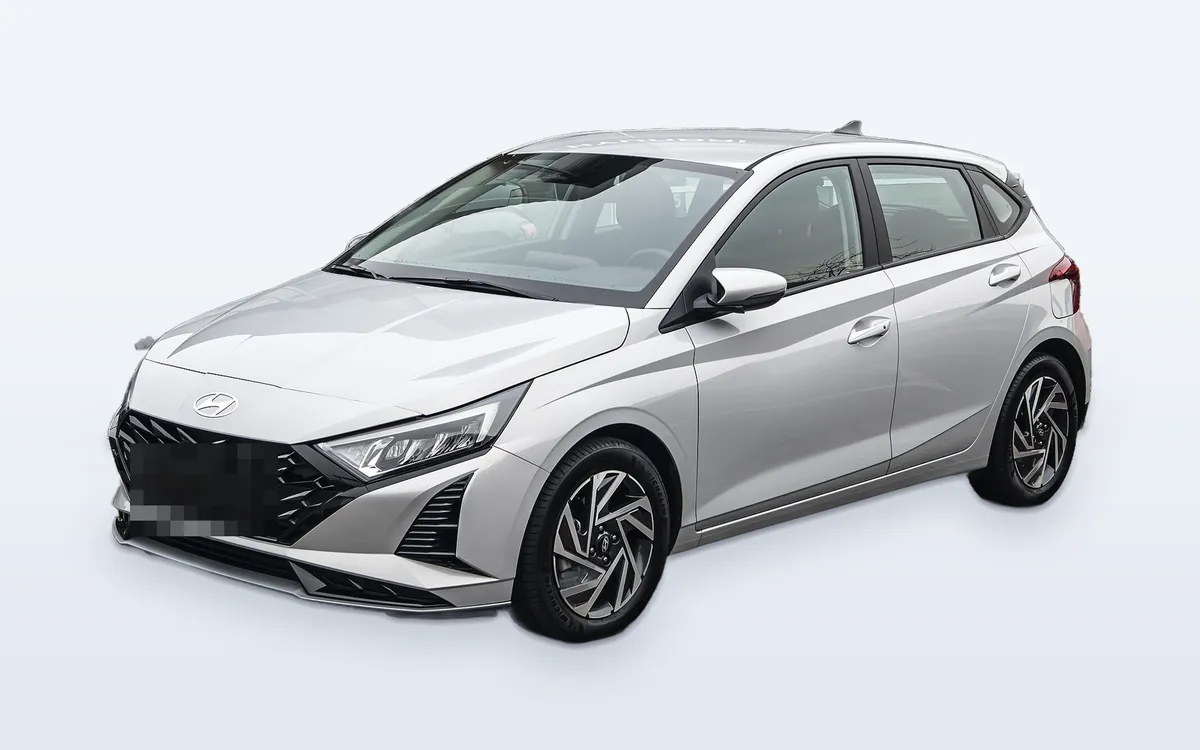





 Hyundai i20 2023this car median €29,110 –